
Matthias Tasler
- Diplom-Sachverständiger (DIA)
- M.A. Business Administration
- MBA Real Estate Management
- Certified valuer (DIAZert, DIN EN ISO/IEC 17024)
Focus: market value, remaining useful life and residential, holiday and commercial properties.

Remaining useful
life report in Schwerin.
Townhouse in the Schelfstadt, Wilhelminian building in the Paulsstadt or a flat in Großer Dreesch: in Schwerin we inspect your building on site and derive the remaining useful life transparently.
Schwerin is a town of contrasts. Around the castle and cathedral stand townhouses and half-timbering, in the Schelfstadt baroque eaves-fronted houses from the 18th century, and in the Paulsstadt and Feldstadt rental buildings from around 1900.
On the other side are the large GDR-era estates, above all Großer Dreesch, Neu Zippendorf, Mueßer Holz and Lankow. Many flats in Schwerin are let, and especially for partly refurbished period buildings and panel buildings modernised around 30 years ago, the actual remaining useful life often differs clearly from the tax assumption.
Do you also need the market value? You will find more on our page Property appraiser Schwerin.
Most enquiries from Schwerin concern one of these three building types.
Half-timbered and eaves-fronted houses, many of them listed. Timber joist ceilings, damp plinths and building services from different decades determine the economic remaining useful life.
Rental buildings with four to five storeys, often refurbished after 1990 but not throughout. We check whether pipes, roof and ceilings were renewed or still date from construction.
Flats in buildings from the 1970s and 1980s. Insulation, windows and bathrooms were mostly renewed in the 1990s and are now reaching the end of their life again.
Every district has its own building stock. This overview shows what we pay particular attention to during the site visit.
Around the market square, cathedral and Pfaffenteich stand townhouses from the 17th to 19th centuries, in the Schelfstadt baroque eaves-fronted and half-timbered houses. Many were refurbished after 1990, often in stages. What matters is whether ceilings, roof structure and pipes were really renewed or only facade and windows.
Rental buildings and town villas from between 1870 and 1914 shape these districts. They are solidly built but now well over 100 years old. Typically, bathrooms, windows and heating were renewed after 1990 while risers, basement ceilings and parts of the roof date from construction.
The large estates in the south of the town were built in prefabricated panel construction from the 1970s. In the 1990s and early 2000s many blocks were insulated and given new windows and bathrooms. These modernisations are now 20 to 30 years old.
Besides more panel buildings, there are apartment blocks from the 1950s and 1960s, often built simply and only partly modernised later. We record each major component and show in the report which have reached the end of their usual life.
On the edge of town there are mainly detached and semi-detached houses, settlement houses from the 1930s and newer homes. Let houses with a backlog on roof, insulation and heating are a typical case, because the building share of the price is often high.
Whether you have just bought a flat or have owned an apartment building for years: the remaining useful life can also be proven for existing properties. The higher depreciation then applies from the next open assessment year.
Only the building share of the purchase price is depreciated, never the land. In Schwerin the land values differ greatly: plots with lake access in Zippendorf, on the Ziegelsee or in the Werdervorstadt cost many times more than plots in the large estates in the south. For a flat in Großer Dreesch the building share is therefore usually very high – and a shorter remaining useful life has a correspondingly strong effect. For a villa by the lake, a larger part of the price falls on the land.
If the purchase contract does not contain a sensible split, or the tax office applies its own standard split, it is worth checking the purchase price allocation as well. We use the standard land values of the valuation committee of the state capital Schwerin and combine both questions in one assignment on request.
At Tasler Immobilienbewertung, the focus is not on an automated online result, but on the specific building. A Remaining Useful Life Appraisal is prepared on the basis of the actual characteristics of the property.
For a remaining useful life report in Schwerin, you also benefit from our regional work in Rostock and Mecklenburg-Western Pomerania and from a direct personal contact.
Focus: market value, remaining useful life and residential, holiday and commercial properties.

Focus: real estate industry, project development and the assessment of a wide range of property types.
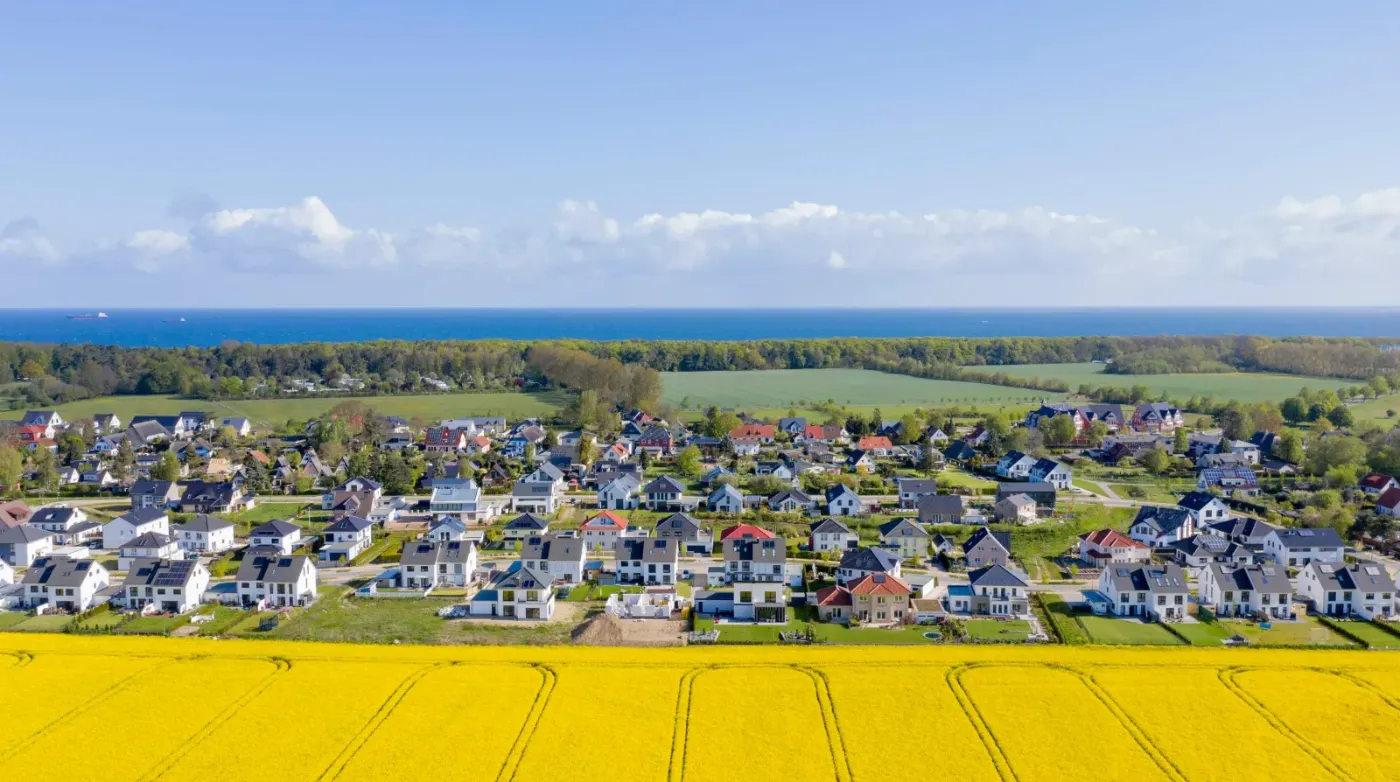
We reach Schwerin from our office in Rostock in about an hour via the A20 and A14, so we like to combine site visits, also in Wismar, Crivitz or the surrounding area.
Besides Schwerin, we prepare remaining useful life reports in Rostock, on the Baltic coast and in the surrounding area:
A remaining useful life report proves that a let building in Schwerin can be used for a shorter period than the flat-rate tax assumption. If the conditions of section 7 (4) sentence 2 EStG are met, a shorter actual useful life can be used for depreciation – and annual depreciation increases. Tasler Immobilienbewertung from Rostock prepares these reports in line with the ImmoWertV through qualified valuers (DIA) with a site visit; you hear back within 24 hours on working days.
As of November 2026
Legal situation, sample calculation and process are the same everywhere. You will find them on our main page – along with dedicated pages for condominiums and apartment buildings.
Tell us briefly which building in Schwerin it is about. We will get back to you and tell you honestly whether a report makes sense.
